Why Your Water Jug Tests Visually Clean But Still Makes You Sick
Reading time: ~8 minutes | Water Jug Health Risk Invisible Bacteria Biofilm
Why Your Water Jug Tests Visually Clean But Still Makes You Sick
The Visual Cleanliness Illusion
This is the single most dangerous misconception about water jug hygiene: if it looks clean, it is clean. This assumption kills the logic required to actually maintain a safe water jug.
The human eye can detect objects down to approximately 0.1 millimeters in size. A typical bacterium is 1-10 micrometers—that's 0.001-0.01 millimeters. You would need millions of bacterial cells clustered visibly together, or a thick biofilm coating, to see contamination with the naked eye.
But you don't need millions of bacterial cells to get sick. A single cup of water containing as few as 100-1,000 pathogenic bacteria from species like E. coli O157:H7 or Salmonella can trigger acute gastroenteritis. That's a completely invisible contamination level—no cloudiness, no discoloration, no smell.
This is called the "threshold dose" or infectious dose—the minimum number of pathogenic bacteria required to cause illness in an average adult. For many waterborne pathogens, this threshold is shockingly low. And your jug can contain this bacterial load while remaining visually pristine.
Understanding Bacterial Load vs. Visual Contamination
Let's talk about actual numbers, because they explain why your jug is dangerous even when it looks fine.
How Many Bacteria Live on a Visually Clean Jug Surface?
A 5-gallon water jug has approximately 6,000-8,000 square inches of internal surface area. In a biofilm, bacteria density reaches about 10^8 to 10^9 colony-forming units (CFU) per square centimeter. That's 100 million to 1 billion bacteria per square centimeter.
On a "clean-looking" jug, you might have only 10^4 to 10^5 CFU per square centimeter. That's still 10,000 to 100,000 bacteria per square centimeter—invisible, but present and multiplying.
Scale that across all internal surfaces and you're dealing with hundreds of millions of bacteria in a jug that looks completely clear.
What's the Infectious Dose for Common Waterborne Pathogens?
| Pathogen | Infectious Dose (CFU) | Symptoms |
|---|---|---|
| E. coli O157:H7 | 50-100 | Severe cramping, bloody diarrhea, kidney damage |
| Salmonella | 1,000-10,000 | Nausea, diarrhea, fever, chills |
| Campylobacter | 400-500 | Diarrhea, abdominal pain, fever |
| Shigella | 10-100 | Severe diarrhea, fever, abdominal cramps |
| Legionella (inhalation) | 1-5 cells | Legionnaires' disease, pneumonia |
| Cryptosporidium | 1-10 oocysts | Watery diarrhea, severe in immunocompromised |
Now look at this table and understand what it means: your water jug doesn't need to be visibly contaminated. It just needs to contain more than 50 E. coli cells to potentially sicken someone. More than 1,000 Salmonella cells. Your jug almost certainly contains these numbers right now if it hasn't been treated with proper sanitization recently.
And you can't see any of it.
The Gap Between Visual Detection and Microbiological Reality
This gap is where illness happens. Let's walk through what's actually in your jug when it looks perfectly fine.
Scenario: Your Jug at Day 5 Post-Installation
You install a new jug on Monday. You look at it on Friday. It's clear. The water tastes fine. No cloudiness, no smell, no visible particles. But here's what's actually happening inside:
- Biofilm has been forming for 5 days. It's still microscopic—not yet visible—but it covers approximately 30-50% of the internal surface area in optimal growth zones (the curved bottom, lower sides).
- Planktonic (free-floating) bacteria have entered the water column from shedding biofilm. The water contains approximately 10^4 CFU/mL—that's 10,000 bacteria per milliliter. A single glass contains millions of cells, many of them pathogenic.
- If any of those cells are E. coli, Salmonella, or Shigella, the water is already at or above the infectious dose threshold for susceptible individuals.
- Visually, you see nothing wrong. Microbially, the water is dangerous.
This is the exact situation that causes the illness pattern people experience: "We all drank from the jug, but only some people got sick." It's not that the water was randomly contaminated. It's that everyone drank the same dangerous water, but some people's immune systems caught the infection and others' didn't—or they drank enough of the pathogenic bacteria to reach their individual infectious dose threshold.
Why Visible Biofilm Means You're Already Very Late
If you can actually see biofilm in your jug—a cloudiness, a coating, discoloration—you have a severe contamination problem that's been developing for weeks. By the time biofilm becomes visible, the bacterial population is 100-1,000 times larger than what causes illness.
Visible biofilm is like seeing smoke from a fire: it means the fire's been burning for a while. By the time you see it, significant damage has already occurred.
You should treat your water jug long before it reaches visible biofilm. You should treat it before biofilm becomes established at all. But because biofilm is invisible, most people don't even know it's forming until symptoms appear.
The Three Types of Invisible Contamination You're Drinking
Type 1: Planktonic Bacteria in the Water Itself
These are free-floating bacterial cells suspended in the water column. They shed from biofilm on the jug surfaces, or they're introduced by the dispenser probe, or they enter with the source water itself. A glass of water from a contaminated jug might contain 10^3 to 10^5 CFU per milliliter—and you can't see them, smell them, or taste them (usually). One glass equals the infectious dose for multiple dangerous pathogens.
Type 2: Biofilm Fragments and Microcolonies
When biofilm sheds, it doesn't release individual bacteria—it releases chunks. These are tiny clusters of 100-10,000 cells held together by the polysaccharide matrix. They fall through the water, settle to the bottom, or flow into your cup. They're still invisible, but each fragment is a concentrated packet of bacteria.
Type 3: Dormant and Spore-Forming Cells
Some bacteria, when under stress (like during an attempted cleaning), enter a dormant state or form protective spores. These cells look dead under a microscope and might not show up on a standard culture count. But when they get into your digestive system and encounter the right conditions (warmth, nutrients), they wake up and start infecting tissue. These cells are essentially invisible even to laboratory testing, but they're still present and still dangerous.
All three of these contamination types can exist in a visually clean jug. All three are invisible. All three can make you sick.
The Symptoms That Point to Water Jug Contamination
If you're experiencing these symptoms after drinking from your water jug, contamination is the most likely explanation:
- Nausea and stomach cramping – Especially 2-6 hours after drinking, suggests acute bacterial infection. The timing is critical: it points to the water source rather than food (which usually takes 6-24 hours).
- Diarrhea or loose stools – Especially if multiple people in your household experience it within the same time window. This is a classic sign of waterborne pathogen exposure.
- Fever following GI symptoms – Indicates a systemic bacterial infection rather than simple food poisoning. This is more serious and suggests Salmonella or Shigella.
- Recurring mild nausea or stomach upset – Happens after drinking from the jug but not after drinking from other water sources. This is the sneaky form of water jug contamination—mild enough that people don't realize it's the water until they track the pattern.
- Symptoms appearing 24-48 hours after drinking from a fresh jug installation – This timing is very specific and suggests the dispenser's probe contaminated the fresh jug immediately upon installation.
The dangerous pattern is when symptoms are mild and attributed to something else—"It must have been that lunch," or "I probably picked up a bug." But if multiple people get mild GI upset after drinking from the same jug, water contamination is the most probable explanation, not coincidence.
Why Standard Cleaning Methods Don't Address This Problem
A bottle brush removes maybe 20-30% of the biofilm. A quick rinse removes loose particles but leaves the bacterial biofilm intact. Wiping the inside with a cloth leaves the curved bottom and lower sides untouched.
None of these methods reduce the bacterial load to safe levels. You're creating the illusion of cleanliness—the jug still looks clean—while the actual contamination remains, continues to grow, and continues to shed bacteria into the water.
This is why people get sick from visually clean water jugs despite their best efforts. They're cleaning for appearance, not for safety. The contamination they can't see is thriving beneath a clean-looking surface.
The Real Meaning of "Clean" for Drinking Water Containers
Microbiological cleanliness means the bacterial count is below the infectious dose threshold for common pathogens. For drinking water containers, this typically means:
- Less than 10 CFU/mL of total heterotrophic bacteria (general indicator of cleanliness)
- Zero detectable CFU/100mL for E. coli and fecal coliforms
- Biofilm coverage reduced to less than 1% of internal surface area (essentially eradicated)
- No planktonic bacteria exceeding safe counts
- No dormant or spore-forming pathogens present
A visually clean jug might have 10^4 to 10^5 CFU/mL—thousands of times above these safety thresholds. You can't see that difference. Your eyes have no way of detecting it. But your immune system will, and so will anyone susceptible to waterborne illness.
How Effective Treatment Addresses Invisible Contamination
An effective sanitizing treatment must accomplish what visual inspection cannot: it must reduce the bacterial population below the infectious dose threshold even though you can't see the difference when you're done.
This is why you can't rely on appearance to tell you if your water is safe. You have to rely on a proven sanitizing method that you know works at the microbiological level.
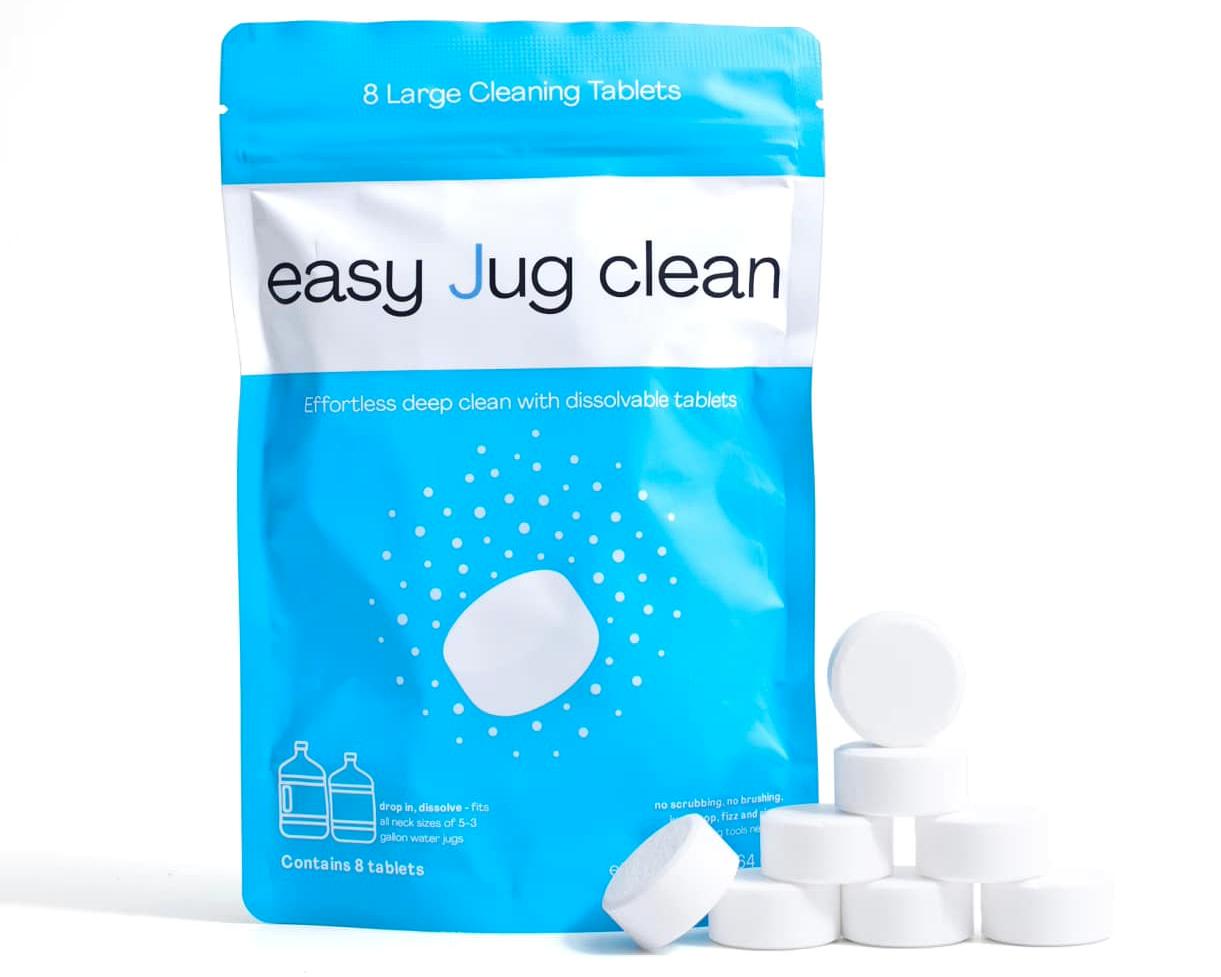
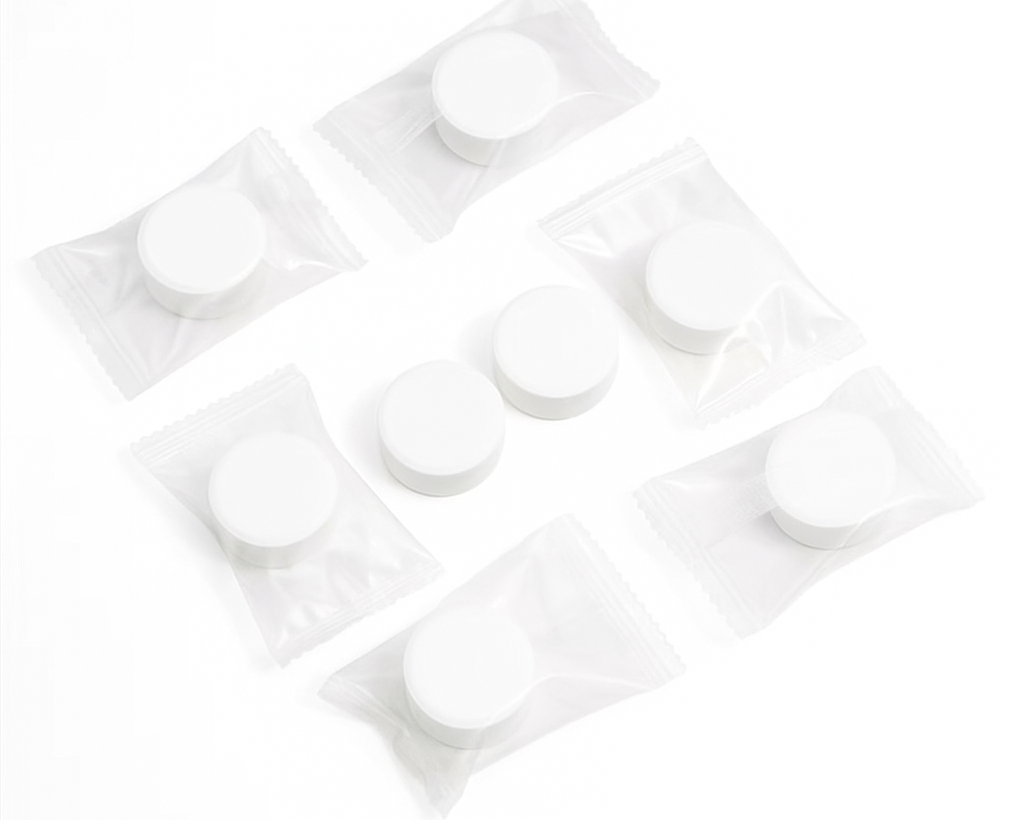
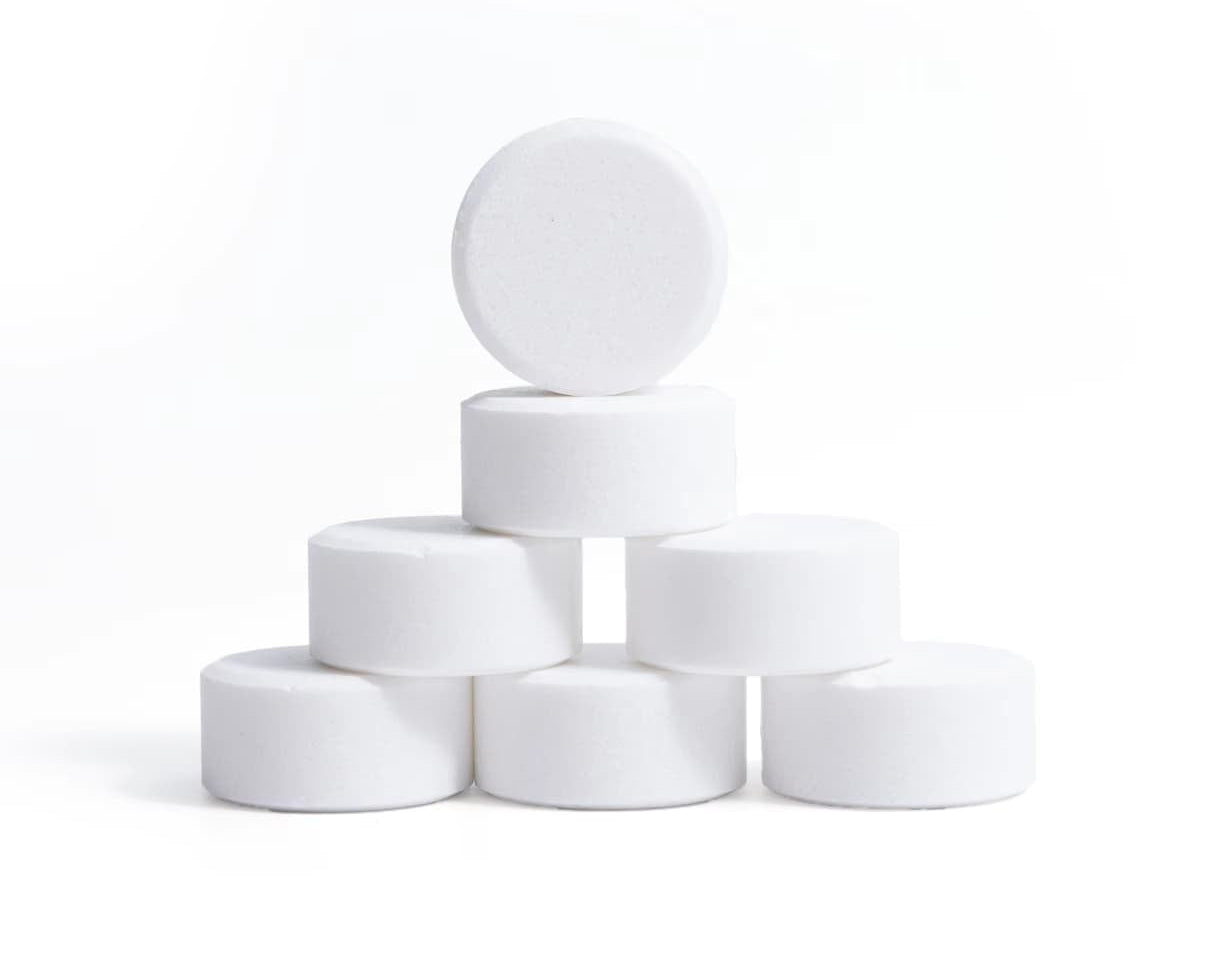
Effervescent tablets like Easy Jug Clean work through multiple mechanisms that address invisible contamination:
- Sodium percarbonate releases active oxygen – This penetrates the biofilm matrix and oxidizes bacterial cells from the inside out, killing both the cells and the matrix structure itself.
- The fizzing action distributes the sanitizer throughout the entire jug volume – Not just the surfaces, but the water itself, killing planktonic bacteria and preventing them from establishing new biofilm.
- Citric acid chelators remove mineral deposits – These deposits can harbor bacteria, so removing them eliminates hiding spots and prevents biofilm re-establishment.
- The treatment eliminates dormant and spore-forming bacteria – Unlike some weak cleaning methods, active oxygen actually kills bacteria in protective states.
After treatment with these tablets, your jug still looks the same. But microbiologically, it's transformed. The bacterial count has dropped from millions to negligible. The biofilm is gone. The water is actually safe.
The appearance doesn't change because the bacterial load was invisible to begin with. You won't see a difference, but your household's health will reflect the difference.
The Pattern That Proves Your Jug Is Contaminated
Here's how to recognize the pattern of water jug contamination when it's still invisible:
Timeline Pattern: Someone gets stomach upset 2-6 hours after drinking from the jug. Other people who didn't drink from the jug don't get sick. Same person gets sick again after drinking from the jug again, days later.
Jug-Installation Pattern: You install a fresh jug. Someone gets sick 24-48 hours later. Before that jug, people were fine. This points to dispenser probe contamination.
Everyone-Affected Pattern: Multiple people in the household experience mild GI symptoms within the same week, after drinking from the same jug, but they don't attribute it to the water because the symptoms are mild and don't seem "serious enough."
Any of these patterns indicate that your water jug contains invisible bacterial contamination at dangerous levels. The lack of visible evidence is not proof that the jug is clean. It's just proof that human eyes can't detect microbiological contamination.
Because visible cleanliness isn't microbiological safety
✅ Sanitize What You Can't See
Your water jug looks clean but probably contains millions of invisible bacteria. Two tablets of Easy Jug Clean, 20 minutes, and the bacterial load drops from dangerous to safe. Your jug will look the same—but it will be actually safe to drink from.
Frequently Asked Questions
Q: If my water jug is visually clean, why would I need to treat it?
Because visual cleanliness and microbiological safety are completely different things. A jug that looks perfectly fine can contain 10 million bacteria per milliliter—above the infectious dose for several dangerous pathogens. You can't see bacteria at that concentration. You need a sanitizing treatment based on science, not on appearance.
Q: How do I know for sure if my water jug is contaminated?
Laboratory water testing is available, but it's expensive and only tests a sample, not the entire jug. The more practical approach: if anyone in your household gets stomach upset specifically after drinking from the jug, your jug is almost certainly contaminated. Treat it immediately and implement weekly sanitizing going forward.
Q: Can bacteria grow in water that's already in the jug?
Yes. Biofilm forms on the jug surfaces and then bacteria shed into the water. Additionally, bacteria can multiply in the water column itself if the water remains in the jug for extended periods (2+ weeks). This is why freshly installed jugs can develop contamination even without the jug having been used before—the biofilm on internal surfaces starts shedding immediately.
Q: Does boiling the water after it comes out of a contaminated jug make it safe?
Boiling kills the bacteria, but it doesn't address the contaminated jug itself. The next glass will be contaminated again. You need to treat the jug itself, not just the water after it comes out.


 Order now — get it by