Why Pre-Cleaning Your Jug Before Sanitizing Matters More Than You Think
Reading time: ~5 minutes | Pre-Cleaning Organic Load Sanitizer Efficacy
The Organic Load Principle
The practical consequence: applying a fixed-concentration sanitizing treatment to a high-organic-load jug delivers less effective active chemistry to the bacteria than the same treatment on a pre-cleaned surface. A jug with significant biofilm and scale buildup requires either a higher sanitizer concentration or multiple sequential treatments to achieve the same pathogen reduction as a pre-cleaned jug would achieve in a single treatment.
What "Pre-Cleaning" Means for a 5 Gallon Water Jug
In traditional two-step sanitization protocol (clean, then sanitize), pre-cleaning means using a physical or chemical cleaner to remove organic material before applying the sanitizer. For a 5 gallon jug, this creates a logical problem: the geometry of the container makes effective mechanical pre-cleaning (brushing) impossible, and a chemical-only pre-cleaning followed by a separate chemical sanitization step is impractical for weekly home use.
When Pre-Cleaning as a Separate Step Makes Sense
For a jug that has developed significant visible contamination — sliminess, heavy scale, visible mold — a light rinse with warm water before the tablet treatment helps remove the worst of the surface organic load before the treatment begins. This pre-rinse isn't a separate cleaning step requiring additional products; it's simply emptying the jug and rinsing with warm water before adding the tablets. This allows the tablet chemistry to work against a lower initial organic load, improving the efficiency of the treatment on heavily contaminated jugs.
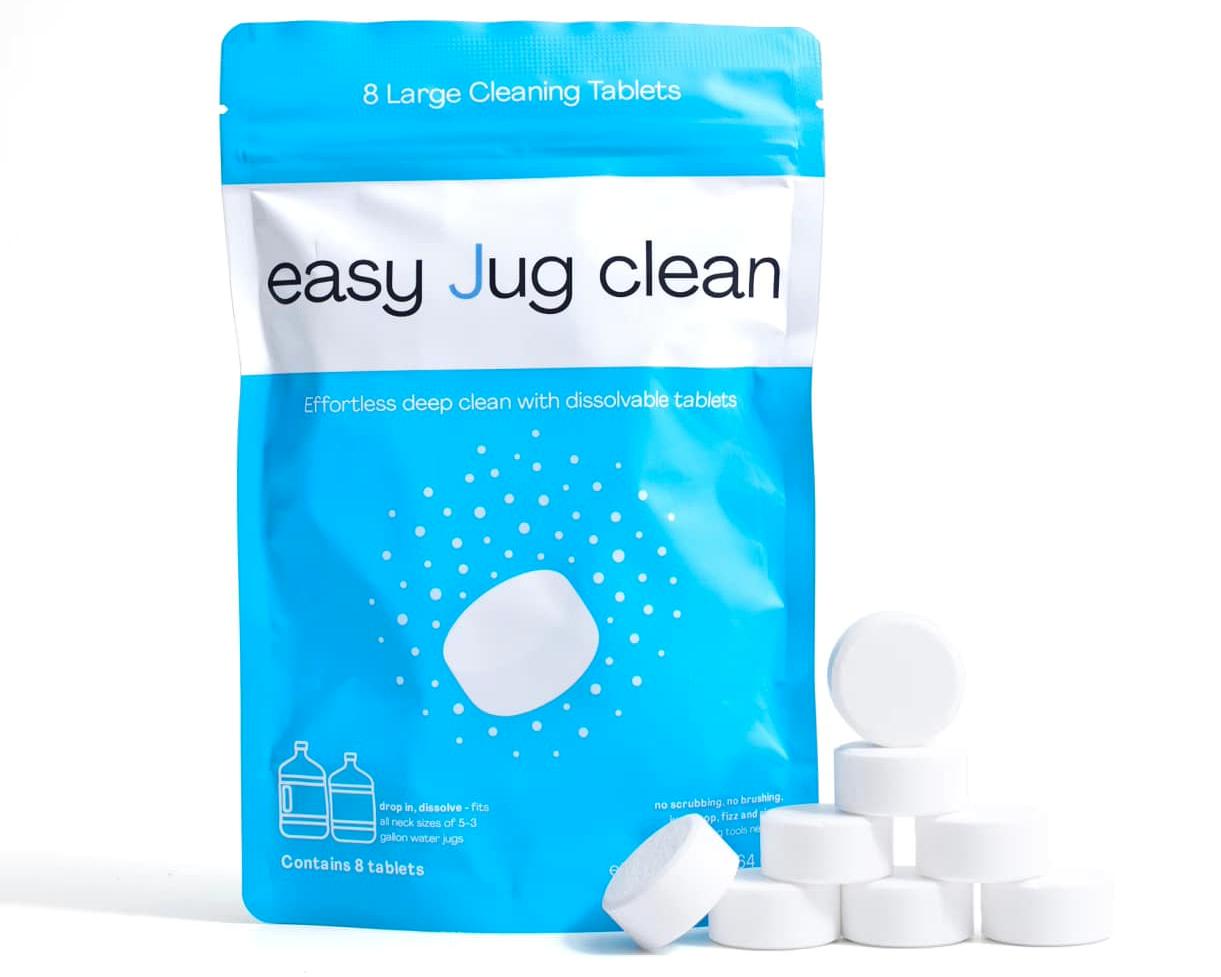
Watch Easy Jug Clean's active oxygen sanitize a 5 gallon water jug without scrubbing:


 Order now — get it by