Why Water Cooler Jugs Need More Frequent Cleaning in Summer
Reading time: ~6 minutes | Summer Cleaning Seasonal Schedule Bacterial Growth Rate
Why Water Cooler Jugs Need More Frequent Cleaning in Summer
The Temperature-Doubling Problem
Bacteria reproduce by binary fission: one cell divides into two, two into four, and so on. The rate at which this happens depends almost entirely on temperature.
This is one of the most consistent rules in microbiology: bacterial doubling time roughly halves for every 10°C increase in temperature.
What does that mean for your water cooler jug?
- Winter (65°F / 18°C): bacterial doubling time ≈ 6–8 hours. A contaminated jug that reaches dangerous levels takes 5–7 days.
- Spring (72°F / 22°C): bacterial doubling time ≈ 4–5 hours. Dangerous levels in 3–5 days.
- Summer (78–85°F / 26–29°C): bacterial doubling time ≈ 2–3 hours. Dangerous levels in 2–3 days.
- Hot office (85°F+ / 29°C+): bacterial doubling time ≈ 1.5–2 hours. Dangerous levels in 1–2 days.
This is the core problem: in summer, bacteria reach dangerous concentrations at roughly 2–3x the speed of winter.
The Summer Cooler Environment
It's not just the ambient temperature. Several seasonal factors combine to create ideal conditions for bacterial explosive growth:
Offices with Irregular AC Usage
Many offices shut down or reduce air conditioning over weekends and during closure periods. A water cooler sitting in an 85°F office Saturday afternoon through Monday morning experiences hours of accelerated bacterial growth at peak doubling speed.
Real scenario: A jug that was fine on Friday afternoon reaches dangerous contamination by Monday morning—before anyone even drinks from it Monday morning.
Direct Sunlight Exposure
If a water cooler sits near a window or in a spot that catches afternoon sun, the internal jug temperature can exceed room temperature by 5–10°F. This accelerates contamination even during normal office hours.
Warm Water in Dispensing Lines
The hot water tap on a cooler creates warm water that can reach 160–180°F. This temperature range is actually ideal for certain heat-tolerant bacteria (thermophilic species). While the hot water itself is being continuously replaced, the lines holding it can become a breeding ground for heat-resistant bacteria that can migrate to the main jug.
Stagnation During Long Holidays
Summer brings extended closures: company shut-downs, long weekends, vacation periods. A jug sitting stationary in a warm, closed office for 4–5 days experiences essentially uninterrupted bacterial growth at peak rates.
| Scenario | Temperature | Doubling Time | Days to Dangerous Level |
|---|---|---|---|
| Normal winter office | 68–72°F | 6–8 hours | 5–7 days |
| Summer office with AC | 75–78°F | 3–4 hours | 3–4 days |
| Summer office, AC off weekends | 80–85°F | 2–3 hours | 2 days (including weekend) |
| Jug in direct sunlight | 82–88°F | 1.5–2.5 hours | 1–2 days |
| Hot office, extended weekend | 85°F+ | 1.5–2 hours | 0.5–1.5 days |
These aren't theoretical. They're the conditions that explain why people notice more taste and odour issues in summer—bacterial contamination is advancing faster than their cleaning schedule can keep up.
What Actually Changes When Summer Arrives
If you've been on a weekly cleaning schedule, summer is when you'll notice the first warning signs:
- Taste changes by mid-week — where it was stable on a weekly schedule
- Slight odour developing — musty or flat taste—by day 5–6, not day 7
- Cloudiness appearing faster — visible contamination showing up 1–2 days earlier
- Slime coating on interior walls — biofilm visible at day 5 instead of day 7–9
These aren't failures of your cleaning method. They're signals that your cleaning frequency is now insufficient for the seasonal temperature change.
The Logic: Why More Frequent Cleaning in Summer
If dangerous contamination develops in 2–3 days instead of 5–7 days, your cleaning interval needs to shrink accordingly.
Winter schedule (65–72°F): clean every 7 days
Contamination reaches dangerous levels: day 5–7
Margin for error: 0–2 days
Frequency: once per week
Summer schedule (78–85°F): clean every 3–5 days
Contamination reaches dangerous levels: day 2–3
Margin for error: 1–2 days
Frequency: 2x per week minimum
This isn't over-cleaning. It's matching your cleaning frequency to the microbial reality of summer temperatures.
Summer Cleaning Schedule Recommendation
Adjust your cleaning schedule based on temperature:
- Winter (Nov–Feb, 65–72°F): Every 7 days
- Spring (Mar–May, 72–78°F): Every 5–6 days
- Summer (Jun–Aug, 78–85°F+): Every 3–5 days (ideally twice weekly)
- Fall (Sep–Oct, 72–78°F): Every 5–6 days
Additional steps for extreme summer heat (85°F+):
- Move the cooler away from direct sunlight if possible
- Ensure AC is running over weekends (don't let the office heat up)
- Before returning from long holiday closures, replace the jug immediately—don't risk the first usage
- If a 3-day cycle is impractical, every 5 days with proper sanitation is the minimum
Why Water Taste Gets Worse in Summer
The taste/odour complaints people make in summer aren't imaginary. They're the direct result of accelerated bacterial metabolism producing volatile compounds faster than in cool months.
- Flat taste — dissolved oxygen being consumed faster by rapid bacterial growth
- Slight sourness — bacterial fermentation producing organic acids
- Metallic tang — bacterial biofilm breaking down plastic polymers or consuming metals in dispensing lines
- Musty smell — volatile compounds from mould/bacterial metabolism
These aren't quality issues with the water itself. They're signs your jug is being colonized faster than your cleaning schedule can prevent.
The Easy Solution: More Frequent, Simple Cleaning
The good news: summer cleaning doesn't need to be more intensive—just more frequent.
Instead of one deep clean per week, shift to:
- Quick clean every 3–5 days in summer — 20–30 minutes with proven sanitising chemistry
- Same effective cleaner, just more often — consistency matters more than intensity
- Prevents contamination before it establishes — easier than fighting advanced biofilm
Real Scenarios: How Summer Affects Your Jug
Scenario 1: Office with Weekend AC Shutdown
You clean Friday at 5 PM (70°F). The AC shuts down Friday night. Weekend temps: 82–85°F. By Monday 8 AM, the jug has been at 85°F for approximately 36 hours. Bacterial count has increased 4–8x in that window alone. By Monday afternoon, it's approaching dangerous levels. A Tuesday morning taste complaint is completely predictable.
Solution: Clean every Friday AND Monday in summer, or keep AC running 24/7.
Scenario 2: Home Cooler in a Warm House
You clean Sunday evening at 72°F. By Thursday, summer heat keeps your house at 78–80°F. Bacterial doubling time ≈ 3 hours. By Thursday evening (5 days out), contamination is significantly advanced. That Friday morning taste change? Predictable.
Solution: Summer cleaning schedule shifts to Wednesday + Sunday (every 4 days) or more frequent if house runs warmer.
Scenario 3: Long Summer Holiday
Your office closes July 4th weekend through July 7th (4 days). You cleaned June 30th. The closed office heats to 85°F. By July 7th, at 2–3 hour doubling time, the jug has roughly 2^32 times the bacterial population it started with—far beyond dangerous levels. The first person in Monday morning is drinking heavily contaminated water.
Solution: Replace or clean the jug the day before/after returning from extended closures.
Bottom Line: Summer Isn't Just Warmer—It's Fundamentally Different
Your jug's contamination timeline changes with the seasons. What's sufficient in winter becomes inadequate in summer—not because your cleaning method failed, but because bacterial doubling times halved.
Summer cleaning is a seasonal adjustment, not a sign of poor practice. It's acknowledging the microbiology of your environment and adapting accordingly.
Summer Heat Demands Summer Cleaning Frequency
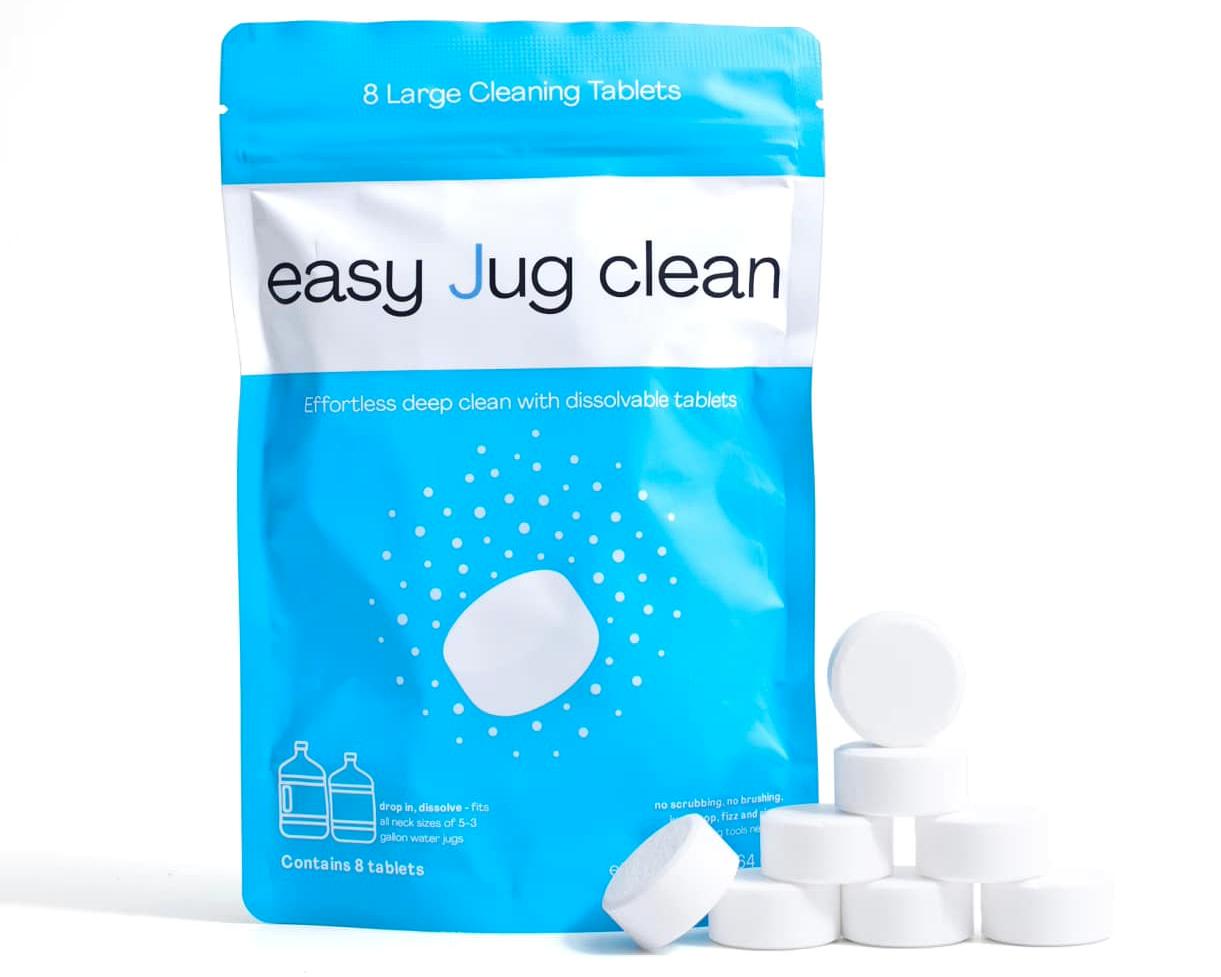
Easy Jug Clean tablets work twice weekly without extra time or effort. Shift to frequent summer cleaning and eliminate heat-related contamination entirely.
Get Easy Jug Clean Now – /8 tablets
Watch Easy Jug Clean handle summer contamination in a water cooler jug:


 Order now — get it by