Does a Water Cooler Filter Protect You If the Jug Is Dirty?
Reading time: ~6 minutes | Water Cooler Filter Jug Contamination Filter Limitations
Does a Water Cooler Filter Protect You If the Jug Is Dirty?
The Filter Misconception
If there's one assumption that undermines water cooler safety, it's this one: "The dispenser has a filter, so the jug itself doesn't really matter."
It sounds logical. Your cooler came with a filter. The filter must protect you from jug contamination. Case closed, right?
Not quite. Water cooler filters—whether they're carbon-based, sediment, or basic charcoal cartridges—are designed to target very specific contaminants: chlorine taste, sediment, some chemical odours, and possibly some trace metals. They are not designed to eliminate bacterial biofilm, moulds, or the living microbial colonies that form inside a dirty jug.
And here's the critical part: by the time water leaves a contaminated jug, the damage is already done. A filter downstream can't undo contamination that started upstream.
What Water Cooler Filters Actually Do (And Don't)
Let's be clear about filter function. A typical water cooler filter:
- Removes sediment — visible particles and cloudiness
- Reduces chlorine taste and odour — through activated carbon
- Traps some chemicals — certain pesticides and volatile organic compounds
- Does NOT effectively eliminate bacteria — most cooler filters aren't designed to kill or remove live bacterial colonies
- Does NOT remove biofilm — the slimy coating of microbes that forms inside jugs
- Does NOT remove mould spores — which can be deeply embedded in jug walls
The reason is straightforward: cooler filters are mechanical or carbon-based, not antimicrobial. They work by catching particles or absorbing chemicals. Bacteria pass right through.
The Water Pathway Problem in Top-Loading Systems
Here's where the jug location becomes critical. In a top-loading cooler—the most common type—the water pathway runs like this:
Jug → Dispenser unit → Filter (usually) → Drinking water
The jug sits on top, and water flows down from there. This means any biofilm, bacterial colonies, or mould spores already present in the jug get pulled directly into the dispenser's plumbing before the filter even has a chance to do anything.
A dirty jug isn't just a jug problem. It contaminates the entire downstream system. And the filter, no matter how good it is, can't retroactively clean water that's already been exposed to jug contamination.
Why Jug Contamination Happens So Fast
Water cooler jugs are breeding grounds for microbial growth. Here's why:
- Plastic surfaces are porous — even at a microscopic level, they harbour bacteria
- Darkness — the jug interior is a perfect low-light environment for certain moulds and bacteria
- Temperature stability — most indoor settings maintain a stable 65–75°F, perfect for slow bacterial reproduction
- Standing water — unlike flowing tap water, water in a jug sits still, allowing microbes to settle and colonise
- Biofilm formation — bacteria create a protective slime layer that adheres to plastic, making them resistant to casual rinsing
Within days of a jug being filled—even with clean water—biofilm can begin forming on the interior walls. Within weeks, bacterial counts can exceed safe drinking water standards. Proper sanitising protocols are the only reliable way to break this cycle.
What About Bottom-Loading Coolers?
Bottom-loading systems (where the jug sits in a cabinet) have a slightly different water pathway, but the problem remains the same. Water still flows from the jug through the cooler's internal plumbing. A contaminated jug means contaminated water entering the system, filter or not.
The location of the jug doesn't change the basic problem: you can't filter your way out of jug contamination.
Filter Replacement ≠ Jug Cleaning
Some people maintain cooler filters religiously but never think about cleaning the jug. This creates a false sense of security.
Replacing a cooler filter regularly is good practice for extending the life of the dispenser and removing some sediment and odours. But it's not a substitute for jug sanitation. They're two completely different maintenance tasks targeting different parts of the system.
Sanitising the jug removes the source of contamination. Replacing the filter catches what makes it through downstream. You need both—but the jug comes first, because that's where the danger originates.
Filters target particles and some contaminants, they are not a substitute for jug hygiene. Here's how to properly clean a 5 gallon water jug regardless of whether a filter is installed.
The Real Protection: Proactive Jug Sanitation
If a filter can't protect you from a dirty jug, what does?
Scheduled, proactive cleaning with a proven sanitising chemistry. The safest, most effective approach uses active oxygen-based cleaning tablets, which kill biofilm and bacteria on contact without the harshness of bleach or vinegar.
Why this works where filters fail:
- It targets the jug directly—the source
- It kills bacteria, not just catches particles
- It breaks down biofilm, not just masks odours
- It prevents contamination before it enters the dispenser system
- It's more effective than relying on filters to handle a problem that shouldn't exist
The best way to clean a jug combines both mechanical scrubbing and chemical sanitation. This two-part approach removes physical debris and kills the microbial communities that hiding under biofilm.
Bottom Line: Don't Rely on Filters to Compensate for Dirty Jugs
Your water cooler filter is a valuable tool, but it's not a safety net for jug negligence. A filter is designed to handle sediment and taste issues, not to reverse the effects of a contaminated water source.
If you want true protection, the strategy is clear: keep the jug clean first. Then maintain the filter. That's the order that actually works.
Stop Relying on Filters to Fix Jug Problems
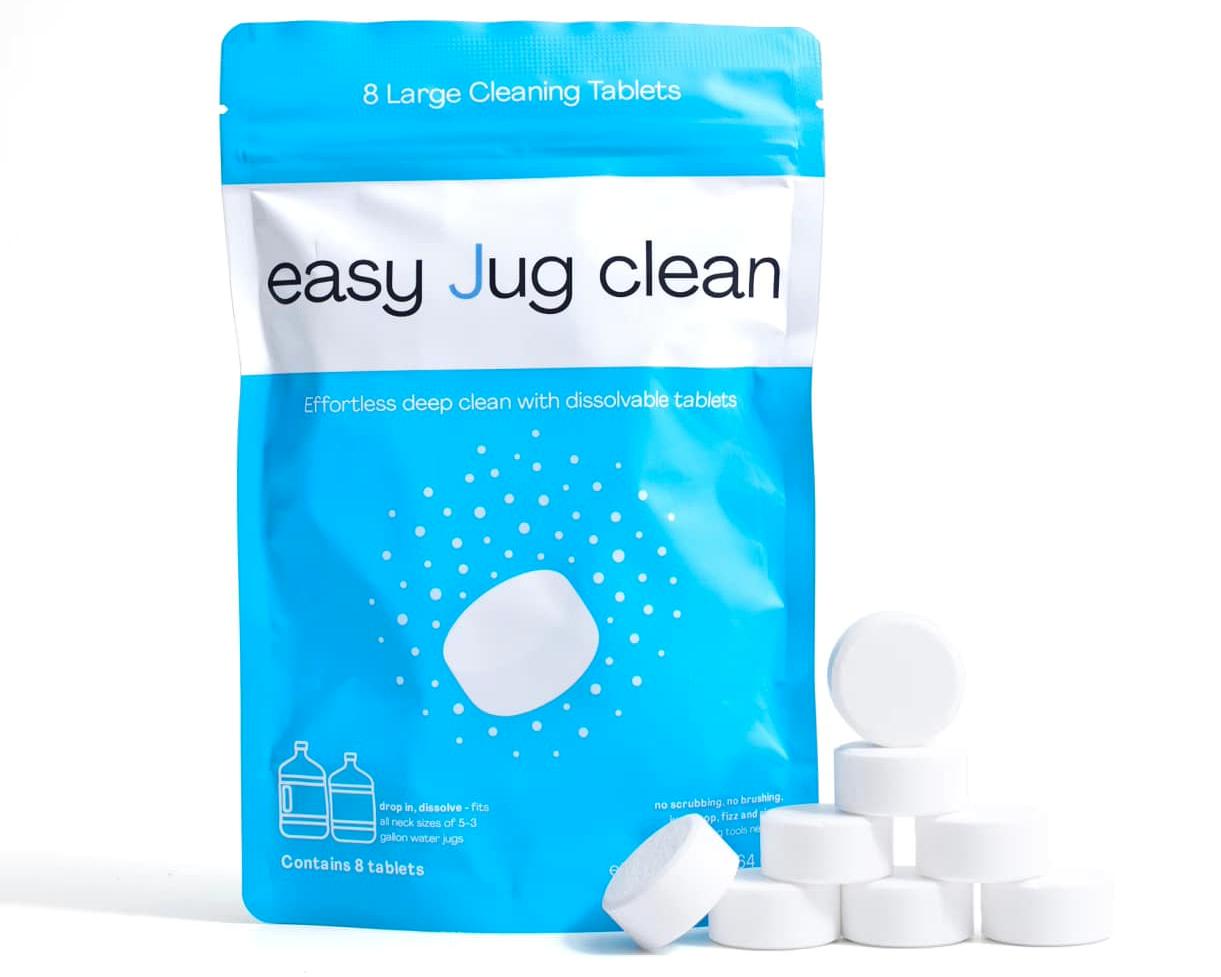
Easy Jug Clean tablets sanitise your jug in 30 minutes. No bleach. No vinegar. Just active oxygen that kills what filters can't catch.
Get Easy Jug Clean Now – /8 tablets
Watch Easy Jug Clean do what a filter can't — clean the jug itself:


 Order now — get it by