Sports Bottle vs Large Water Bottle: The Critical Cleaning Differences Most Articles Miss
Reading time: ~6 minutes | Bottle Comparison Cleaning Science Large Water Bottle
The Category Confusion That Makes Cleaning Articles Useless
Search "how to clean a water bottle" and you'll get advice optimized for a sports bottle: dish soap, a bottle brush, a vinegar rinse, dishwasher cycle, air-dry. The advice is fine — for a sports bottle. The problem is that the same articles often add a sentence like "and the same approach works for any water container, including 5-gallon jugs." That sentence is wrong, and the people who follow it are the reason home water dispensers across North America are quietly accumulating biofilm for months at a time.
The cleaning approach is determined by the container's geometry, volume, refill cycle, and material — and all four shift dramatically between a sports bottle and a large water bottle. This article walks through the seven specific differences that change the cleaning equation, so you stop applying small-bottle logic to a category of containers that needs categorically different treatment. For the full picture, see our pillar guide on cleaning large water bottles.
Difference 1: Mouth Opening Relative to Body
A sports bottle has a wide-mouth opening, typically 2 to 3 inches across, accessing a body of similar diameter. The proportion is roughly 1:1 — anything you can fit through the opening can reach the inside. A large water jug has a 1.25 to 1.5 inch opening accessing a body diameter of 10 to 12 inches. The proportion is roughly 1:8. This single geometric ratio determines almost everything else about cleaning.
Difference 2: Surface Area to Volume
The interior surface of a sports bottle is roughly 100 square inches — small enough that any cleaning agent reaches everything quickly. The interior surface of a 5-gallon jug is roughly 800 square inches — eight times more bacterial real estate. Bacteria don't grow uniformly through water; they colonize surfaces, build biofilm, and shed back into the water column. More surface area means more colonization sites, more biofilm potential, and more contamination per refill cycle.
Difference 3: Water Dwell Time
A sports bottle is filled and emptied within hours. A 5-gallon jug sits on a dispenser for 5 to 14 days while a household slowly works through it. This difference — hours vs. weeks — is the single biggest variable in bacterial growth. Biofilm establishment begins within 24–48 hours on any wet surface. A sports bottle never gives bacteria long enough to establish anchored colonies. A dispenser jug gives them a head start every single refill cycle.
Difference 4: Refill Behaviour
You refill a sports bottle from a tap, a fountain, or a filter pitcher — usually with treated municipal water. You refill a 5-gallon jug by lifting and inverting a new commercial bottle onto the dispenser, or by filling at a refill station. The refill itself can introduce contamination, especially in commercial refill scenarios where the previous container's residue can transfer. The contamination chain is longer at scale.
Difference 5: Material Behaviour Under Cleaning
Sports bottles are usually stainless steel, Tritan, or thick-walled HDPE — materials that tolerate hot water, dishwashers, and bottle brushes. Most large water jugs are polycarbonate or PET, materials chosen for clarity and strength but vulnerable to heat distortion, harsh chemical exposure, and surface scratching. Brush damage on polycarbonate creates micro-scratches that permanently harbour bacteria — making the jug worse with every clean. The material vulnerability profile is completely different at scale.
Difference 6: Drying Geometry
A sports bottle inverted on a drying rack air-dries fully in about 4 hours. A 5-gallon jug inverted at the same angle holds residual moisture in the curved shoulder for 12+ hours. The drying problem is geometric: the same shape that makes the jug hard to clean also makes it hard to dry. Residual moisture in a sealed environment is what bacterial regrowth needs.
Difference 7: User Verification
You can see inside a sports bottle. You can verify cleanliness with a glance, a sniff, and a finger swiped along the interior. You cannot do any of this with a 5-gallon jug. The opening is too small to inspect, the volume too large to assess by smell, the interior too dark to see. Visual cleanliness in a large water bottle is not microbial cleanliness — and the inability to verify is one of the reasons contamination accumulates unnoticed.
The Cleaning Implications: Side by Side
| Cleaning Approach | Sports Bottle | Large Water Bottle |
|---|---|---|
| Bottle brush + dish soap | Effective | Reaches less than 50% of surface |
| Dishwasher | Most are dishwasher-safe | Doesn't fit; interior untouched |
| Vinegar soak | Useful for descaling | Doesn't sanitize at any volume |
| Hot water rinse | Sufficient for daily use | Removes nothing meaningful |
| Self-distributing tablets | Optional | The only fully effective option |
| Air-dry inverted | 4 hours, fully dry | 12+ hours; residual moisture trapped |
What Actually Works for Large Water Bottles
Once you accept that the cleaning physics is different, the solution becomes obvious: you need a cleaning agent that distributes itself through the entire interior volume, requires no mechanical contact, and acts on surfaces a brush could never touch.
✅ Built for the Cleaning Problem That Sports Bottle Methods Can't Solve
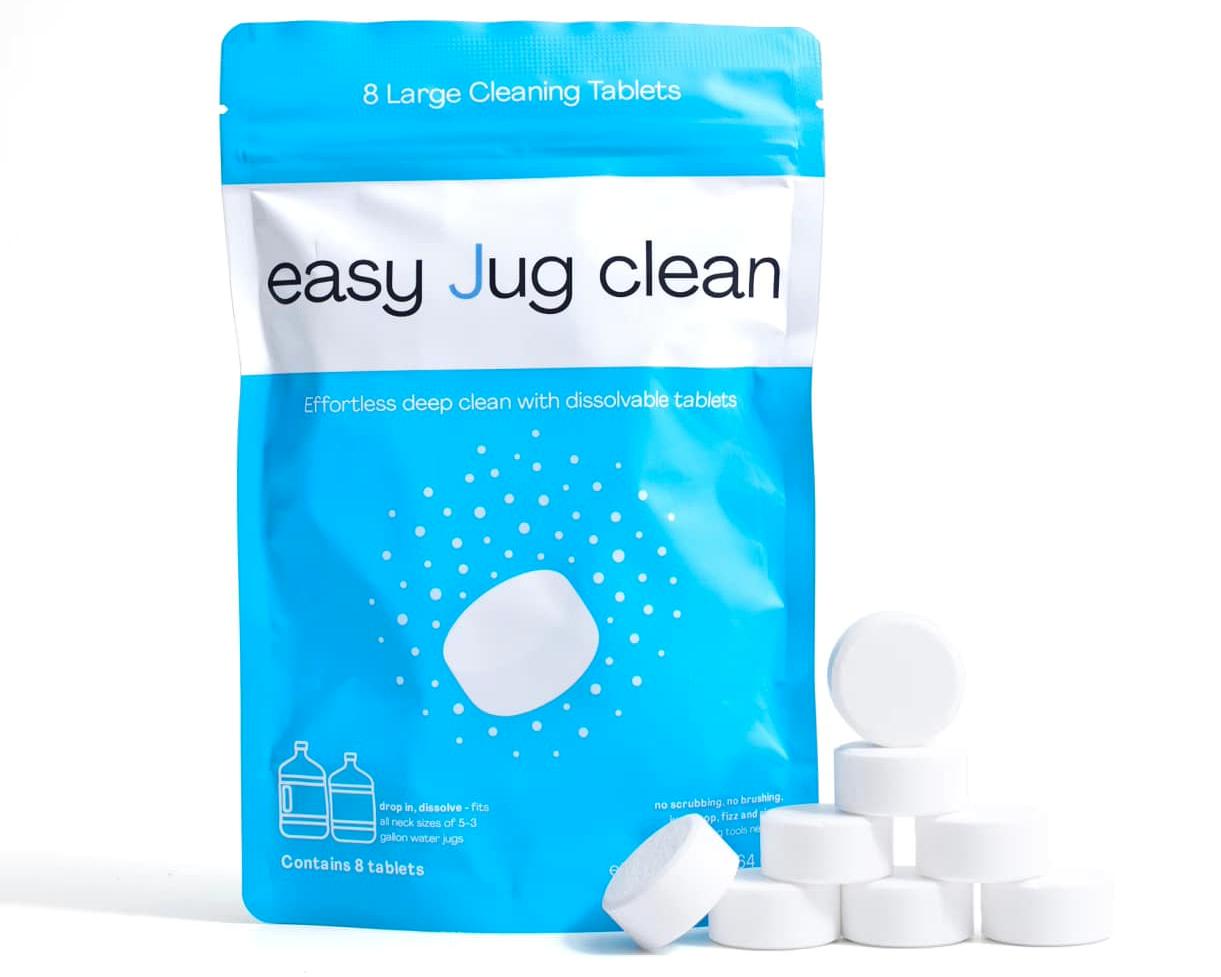
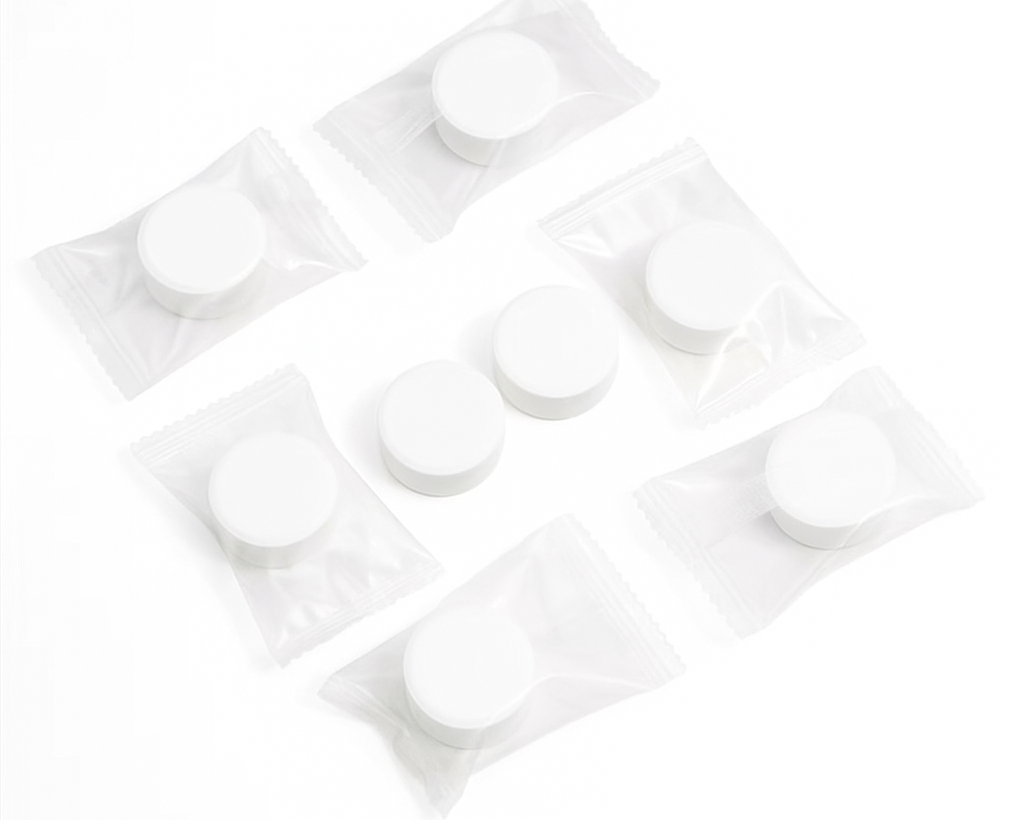
Drop two tablets into warm water. Wait 20 minutes. Rinse. The cleaning method that works at sports bottle scale doesn't work above one gallon — Easy Jug Clean was designed for exactly this gap.
FAQ: Bottle-Size Cleaning Questions
Q: At what size does a "sports bottle" become a "large water bottle"?
The threshold isn't strict, but mechanically the cleaning rules start changing somewhere around 1 gallon — the size at which a typical kitchen sink is too small to fully invert and rinse the container, where a bottle brush stops reaching all interior surfaces, and where dwell time between refills extends past 24 hours.
Q: What about a 1-gallon refill jug — closer to a sports bottle or a large water bottle?
Functionally large. A 1-gallon container has narrow-neck geometry, multi-day refill cycles, and surface area that exceeds what a brush can reach. Treat it like a small large-water-bottle, not a big sports bottle.
Q: Are there any sports bottle cleaning habits that do translate to large water bottles?
Two: (1) inverting after cleaning to drain residual moisture, and (2) cleaning more frequently in summer when warmth accelerates bacterial growth. The frequency principle holds at any scale; the methods don't.
The Bottom Line
Cleaning a sports bottle and cleaning a 5-gallon water jug are different problems. The same intuition that says "bigger means more soap, longer brush, more time" gets the answer wrong. Bigger means a different cleaning physics entirely — chemistry rather than mechanics, distribution rather than scrubbing, contact time rather than elbow grease. Use sports bottle methods on sports bottles. For everything above one gallon, use the method designed for the geometry.
See Easy Jug Clean handle a 5-gallon jug with no scrubbing required:


 Order now — get it by