How to Get Rid of Soapy Taste in a 5 Gallon Water Jug
Reading time: ~7 minutes | Soapy Taste Water Jug Soap Residue Fix
How to Get Rid of Soapy Taste in a 5 Gallon Water Jug
Why Dish Soap Leaves a Lasting Soapy Taste
When you use dish soap to clean your water jug, you're introducing a surfactant — a molecule with a hydrophobic (water-fearing) tail and a hydrophilic (water-loving) head. Those surfactant molecules are specifically engineered to cling to grease and organic material. Here's the problem: the plastic that makes up your 5-gallon jug (typically polycarbonate or a similar polymer) has a surface energy that attracts those soap molecules.
Unlike stainless steel or glass, plastic has microscopic surface irregularities and the molecular structure favors adhesion of soap compounds. When you rinse with plain water, the water simply passes over the soap layer. The soap doesn't dissolve into the rinse water because soap is hydrophobic — it actively avoids water. This is exactly why soap is good at trapping grease, but it's also why a thin film of soap residue stays stubbornly adhered to your jug walls.
The soapy taste you're experiencing is that residual surfactant making direct contact with your taste buds. Even microscopic amounts create a noticeable soapy flavor because your mouth's sensory receptors are extremely sensitive to surfactants.
Why Rinsing Doesn't Work (And Why You've Probably Tried It)
You've likely already spent 15 minutes rinsing your jug with hot water, cold water, maybe even vinegar or baking soda. None of it worked. Here's why: plain water doesn't break the bond between soap and plastic.
Soap residue adheres through molecular attraction — the hydrophobic tails of soap molecules embed into the plastic polymer chains. Water molecules, being highly polar, don't have the chemical structure necessary to dislodge those embedded soap compounds. You can rinse forever and the soapy taste will persist.
This is compounded by the geometry of a 5-gallon jug. The narrow neck means water velocity when rinsing is relatively low. You can't generate the turbulence needed to mechanically scrub soap off interior walls. Water poured in flows straight down the center and out, leaving the upper walls and neck untouched. The result: rinsing feels like you're doing something, but the contact time and force are insufficient to remove surface-bonded contaminants.
The Micro-Scratch Problem: Why That Soapy Taste Won't Disappear
If you've been using a bottle brush to clean your jug, you've likely created tiny scratches in the plastic surface. These aren't visible to your eye, but they're there. Micro-scratches increase surface area dramatically and create physical pockets where soap molecules can lodge even more securely.
A single brush stroke can create hundreds of micro-scale damage points. Soap molecules don't just rest on the plastic anymore — they're trapped in these scratches. Rinsing can't reach into micro-crevices. Brushing deeper just grinds the soap further in and creates more scratches in the process.
This is why people report that soapy taste comes back, even after thorough cleaning. They've trapped the soap in the micro-damage and never actually removed it.
The 3-Step Process to Eliminate Soapy Taste Completely
Step 1: Pre-rinse to Remove Bulk Soap
First, empty any remaining water from your jug. Fill it halfway with hot tap water and slosh it vigorously for 30 seconds. The goal isn't to remove all soap — it's to remove loose, un-bonded soap molecules. Empty the jug completely. Repeat this pre-rinse once more.
Why hot water? Heat increases molecular motion, which helps detach loosely bound soap molecules. You're not removing the chemically bonded residue yet; that's step 2.
Step 2: The Active Oxygen Treatment (The Key Step)
This is where most DIY attempts fail. You need a chemical compound that can break apart soap molecules and lift them away from plastic. Plain water and mechanical scrubbing can't do this. Vinegar won't do it. Baking soda won't do it.
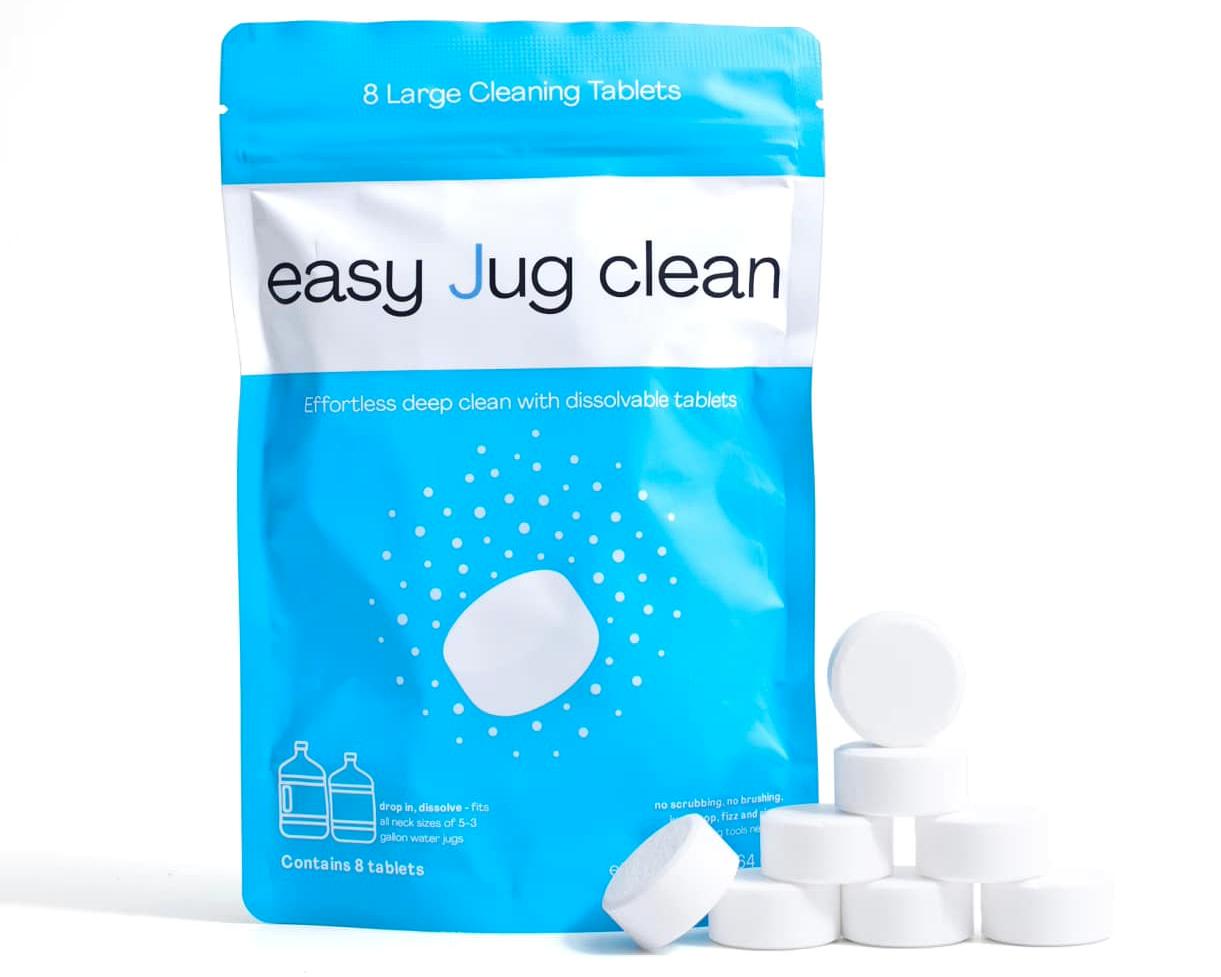
The solution is a food-grade active oxygen cleaner like Easy Jug Clean. These tablets work by releasing oxygen bubbles that are small enough to penetrate micro-scratches and create a cleaning action that reaches areas brushes cannot touch. More importantly, the chemical composition includes surfactant-breaking agents and chelators that specifically target and dissolve soap residue and mineral deposits that soap has bonded to.
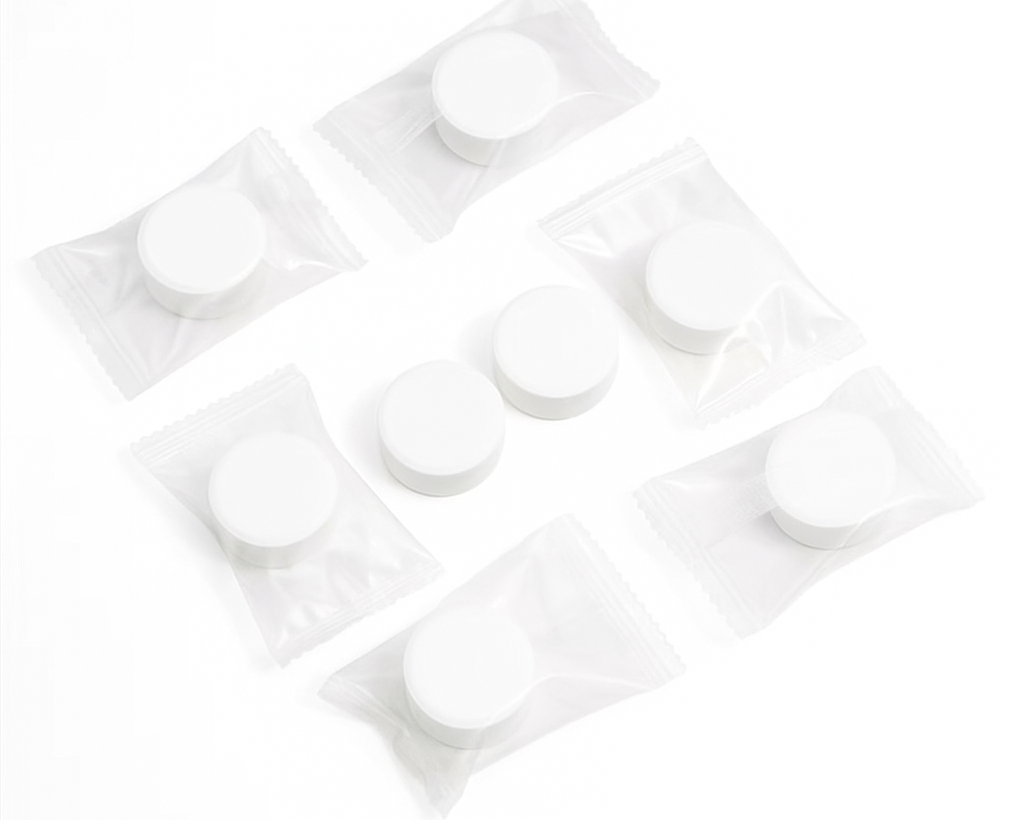
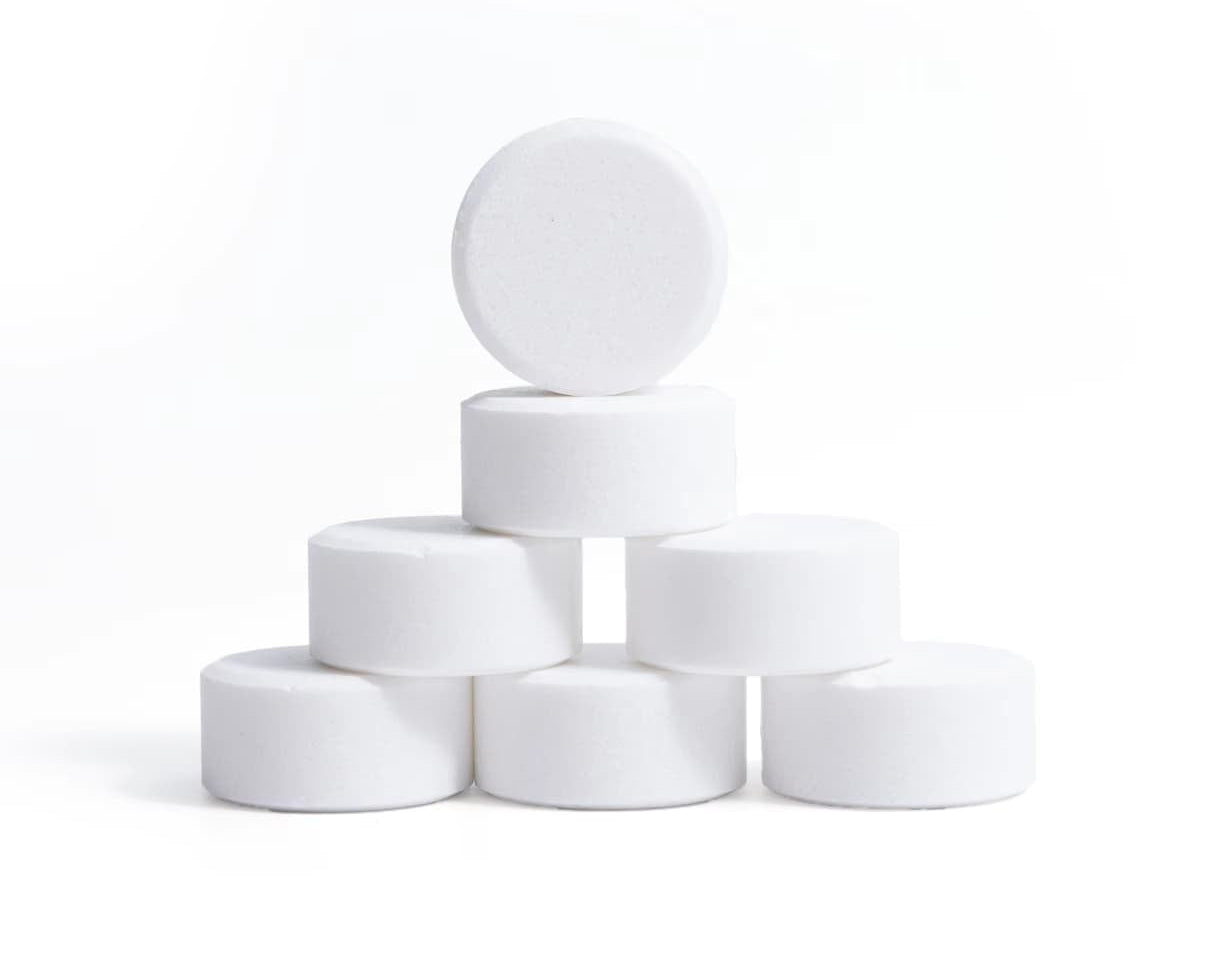
Fill your jug 3/4 full with warm (not boiling) water. Drop in 2 tablets of Easy Jug Clean. Let them fizz and work for 20 minutes. During this time, the effervescent action is physically scrubbing the interior walls, and the chemistry is breaking apart soap-plastic bonds.
After 20 minutes, empty the solution and fill with plain water. Rinse thoroughly — this time, the soap residue has been chemically broken down and will rinse away cleanly.
Step 3: Final Verification Rinse
Fill the jug with fresh water, close it, and let it sit for 5 minutes. Then empty it and smell the jug opening. You should detect no soapy odor. Take a small sip of that rinse water — it should taste completely neutral. No soapy flavor.
If even a hint of soapy taste remains, repeat the active oxygen treatment. Some heavily-used jugs with deep micro-scratches may require two treatments to fully break apart all bonded soap residue.
Why This Works Better Than Brushing or Repeated Rinsing
Bottle brushes are blunt instruments — they can't reach micro-scratches and they create more of them. Repeated rinsing is a thermodynamic dead-end; without a chemical agent to break soap-plastic bonds, you're relying on water to do something it's chemically incapable of.
Active oxygen cleaning works on the molecular level. It breaks apart the hydrophobic-hydrophilic bonds that keep soap stuck to plastic. The fizzing action provides mechanical agitation without damaging the jug further. And the process is complete in 20 minutes versus hours of futile brushing and rinsing.
Preventing Soapy Taste From Returning
The best way to avoid this problem is to never use dish soap on your water jug in the first place. Dish soap is specifically formulated for cleaning greasy dishware, not for drinking water containers. If you must clean your jug, use a food-grade cleaner designed for water containers.
For routine maintenance, use Easy Jug Clean every 2-3 weeks (depending on usage). At roughly 63 cents per treatment, this is far cheaper than replacing a jug that tastes permanently soapy and it eliminates the risk of residual chemical flavors entirely.
The Soapy Taste as a Warning Sign
If your jug tastes soapy, it's also likely harboring other contaminants. Biofilm forms readily in water jugs, especially in the micro-scratches you may have created with brushing. That same micro-scarred surface that traps soap also traps bacteria and mold spores. The soapy taste is actually your cue that the jug needs a comprehensive cleaning, not just a soap removal.
This is why your jug can look clean but still pose health risks. Invisible contamination coexists with the visible problem (soapy taste). Addressing the soapy taste with an active oxygen treatment simultaneously tackles the deeper contamination issue.
Frequently Asked Questions
Q: How many times do I need to treat my jug to get the soapy taste fully gone?
Most jugs require one treatment with Easy Jug Clean. If you've been using a bottle brush extensively and have deep micro-scratches, a second treatment 24 hours later may be needed. Heavy dish soap use typically requires only one treatment because the soap hasn't penetrated as deeply. Taste-test after rinsing following your first treatment to determine if a second is necessary.
Q: Is baking soda effective for removing soapy taste?
No. Baking soda is mildly abrasive and can help with odor absorption, but it doesn't break the chemical bonds between soap and plastic. It may mask the soapy taste temporarily, but the residue remains. You'll need an active oxygen treatment or a chemical chelator designed specifically for plastic water containers to fully remove soap residue.
Q: Can I use hot water to rinse out soapy taste faster?
Hot water helps during the pre-rinse step, but it won't remove chemically bonded soap residue. In fact, heat can accelerate the bonding of some surfactants to plastic. The only proven method is chemical treatment with an active oxygen cleaner followed by thorough rinsing.
Q: Should I throw out the jug and buy a new one instead of cleaning it?
No. A single Easy Jug Clean treatment costs about 63 cents and takes 20 minutes. A new 5-gallon jug costs $6-12. Plus, once you've had a soapy-tasting jug, you'll want to avoid that situation again — which means using the right cleaning method going forward, not just replacing the jug.
One dose. No taste left behind.
✅ Remove Soapy Taste in 20 Minutes
Easy Jug Clean's active oxygen formula breaks apart soap residue at the molecular level, eliminating that stubborn soapy taste permanently. Drop 2 tablets, let them fizz for 20 minutes, rinse, and enjoy clean water again.


 Order now — get it by